IN SHORT:
UPRIGHT: Expansion and performance of self. Opportunities to display skills in new settings. Evolutions in gender and identity.
REVERSED: Expression for Expression Sake. Playing small. lack of foresight, unexpected delays
KEEP SCROLLING DOWN FOR IN DEPTH EXPLANATION
IN DEPTH:
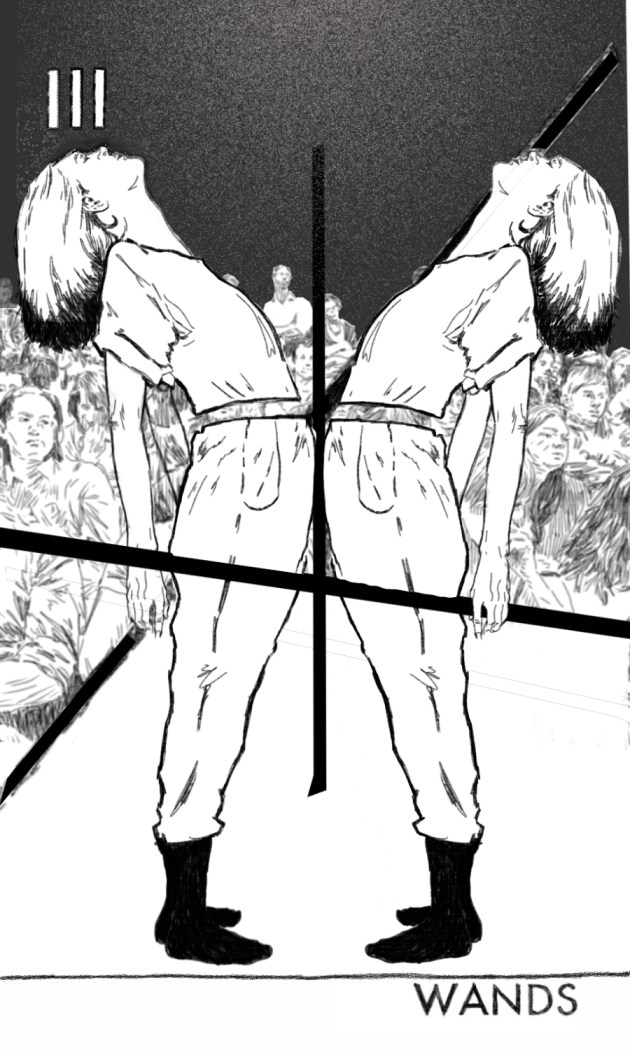
The Three of Wands depicts performers holding pose in front of an audience. They stand firmly planted on center stage, gazes lifted to the heavens. Each one holds a long dark staff, and they inexplicable have elevated the third staff using a mirrored pressure between their bodies.
They feel the many eyes upon them, and for a moment the fear of loosing the audience becomes dizzying. Reactive to the onlookers shifter their bodies about, the two dancers breathe in a slow harmony that assures their shaky confidence. The bodily pressure of the dance increases lifting the third staff higher. The movements take on an uncanny quality, as thought the dancers are slowly splitting open a hole in the perceivable world.
To dance this dance—is to transcend your stage, while maintaining composure in face of the mouths agape as you stand upon it. It is a reminder: we don’t perform for an audience’s approval, we perform for ourselves, we perform to find new ways of moving, we perform to explore and express all that is possible with our bodies in this world.
…………
“my first critical insight into the subtle ruse of power: the prevailing law threatened one with trouble, all to keep one out of trouble. Hence, I concluded that trouble is inevitable and the task, how best to make it, what best way to be in it.”
― Judith Butler, Gender Trouble: Feminism and the Subversion of Identity
 monthlysmokeandmirrors.com