IN SHORT:
UPRIGHT: Heartache and intense emotional suffering, anguish, hurt. Grieving losses and disappointments.
REVERSED: The torment of self-doubt and the inner-critic. Letting go of hurt and internal identification with one’s wounds. Optimism, and forgiveness of self and or others.
KEEP SCROLLING FOR IN DEPTH EXPLANATION
IN DEPTH:
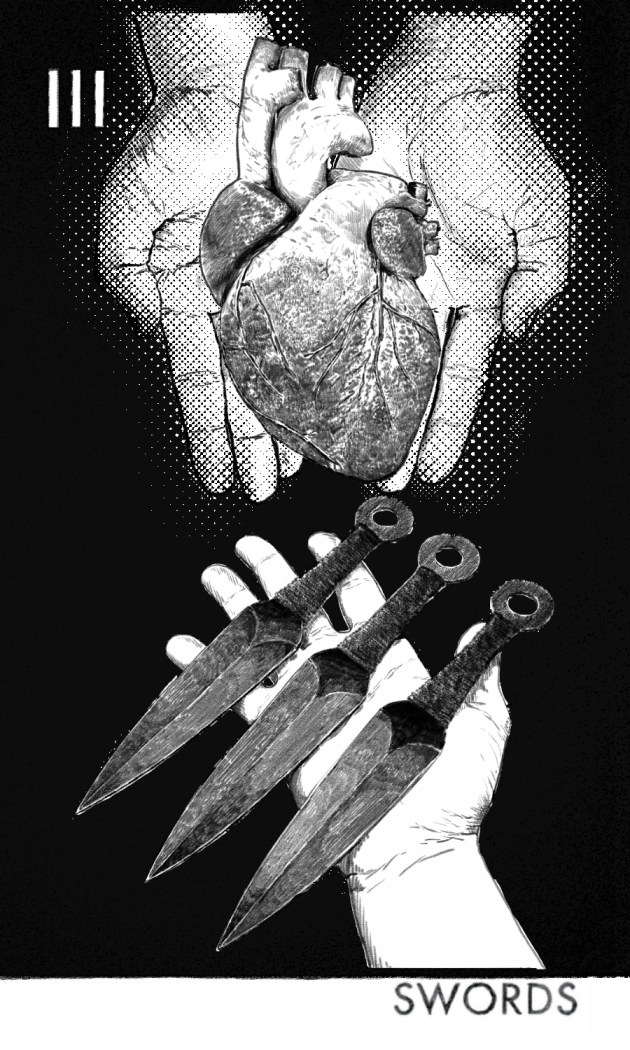
The Three of Swords shows a heart placed on two open hands, and another hand abruptly meeting this gesture with the emphatic presentation of 3 daggers. In short, the open heart is pitted against sneaky weapons. Do not let this picture take you off guard, because that might be it’s precise and malicious intention. Mal intent can be a powerful and unruly weapon to inflict pain with words and images—abuse imposed via a concept.
We are witnessing a grotesquely unbalanced exchange. A contract or expectation broken and born anew. When the Three of Swords shows up signals deep upset and disappointment. You may experience painful feelings of sorrow, misery, grief, and heartbreak as a result of the cruel words, deeds, and intentions that have wounded the heart you so naively wore upon your sleeve. These occurrences frequently come as a complete surprise, passive aggressive quips, which makes them considerably more distressing.
The emotions we hold in our bodies shed and discharge out into the world with a variety of consequences: clenched muscles, altered breathing, verbal outbursts, and negative self-narration. The Three of Swords asks us to encounter the full spectrum of our emotions, especially the painful ones with honesty, and the care.
Little threats and degradations can rattle about in our memory, leaving wounds that sustain brutal and enduring damage to our lives and self-understanding. And yet, these three hands appear disembodied in the card, and lost amidst a a foggy nowhere space—reminding us that the emotional pain inflicted sometimes not even personal, this isn’t necessarily ‘about you’, and like the fog, the hurt feelings too, will pass if we let them.
It is at those most trying moments, like a major set-back, that it most useful to allow yourself the time and space to scream, cry, or sob so loudly that you can barely breathe. Letting it all out, is how we process painful events and heal: becoming more resilient than ever.
…………………………………………………………………………………………………
“How long have people thought about the present as having weight, as being a thing disconnected from other things, as an obstacle to living?”
― Lauren Berlant, Cruel Optimism
“there is nothing more alienating than having one’s pleasures disputed by someone with a theory.”
― Lauren Berlant, Desire/Love
“I salvaged my capacity to attach to persons by reconciling of both their violence and their love as impersonal. This isn’t about me.”
Lauren Berlant, Two girls, Fat and Thin.
 monthlysmokeandmirrors.com